Posts

Jan and Cora Gordon in the USA, November 1927: "The last of the Hearse"

Image
Today is Thanksgiving in the USA and, remembering that Jan and Cora Gordon had given a lecture at the Carnegie Hall in Pittsburgh on December 3rd 1927 , I wondered where they had been for Thanksgiving that year and if they had made any mention of the day in their books. The time period in question is addressed in the final chapter, "Autumn and Adieu", of " On Wandering Wheels "(1929). After a stay on a tranquil New Jersey farm they returned to New York. " The tour was over, but the "Hearse" [ their 1920 Ford sedan ] remained. For her age and natural infirmities she had run nobly. " At the second car cemetery they visited they were offered twenty dollars for the car and " not caring to wander more for a possible dollar or two, we surrendered the poor "Hearse" into the hands of her destroying angel. She had served us well, if sometimes a little temperamentally. " "THE LAST OF THE HEARSE" "I can'...
Jan and Cora Gordon with "Ratapouf" in pre-WW1 Paris

In his account of the pre-WW1 international gatherings hosted by Paul Fort at the Closerie des Lilas (Salis, John, 1916, The New Witness, pg 277), Jan Gordon notes the presence of "Ratapouf, the Dutchman, sometime labourer on the Eiffel Tower, guide to the Louvre, man of erudition, and author of three thin books of verse which had taken seven years to produce." Who was this Ratapouf? The mention of "guide to the Louvre" strongly suggests Fritz R. Vanderpyl  (1876-1965) who published "Six promenades au Louvre. De Giotto à Puvis de Chavannes" in 1913. The thin books of verse would include "les Saisons Douloureuse" (1907) and "Les Saisons d'un Poète" (1911). He later wrote on " Art and Eiffel Towers " (1920) in "POETRY: A Magazine of Verse", pages 98-101. He quotes Apollinaire, " Let us hurry to love the little train, with its blinking engine, running through the valley. If tomorrow it shall be ancient, e...

Jan and Cora Gordon with Andre Salmon in pre-WW1 Paris

Image
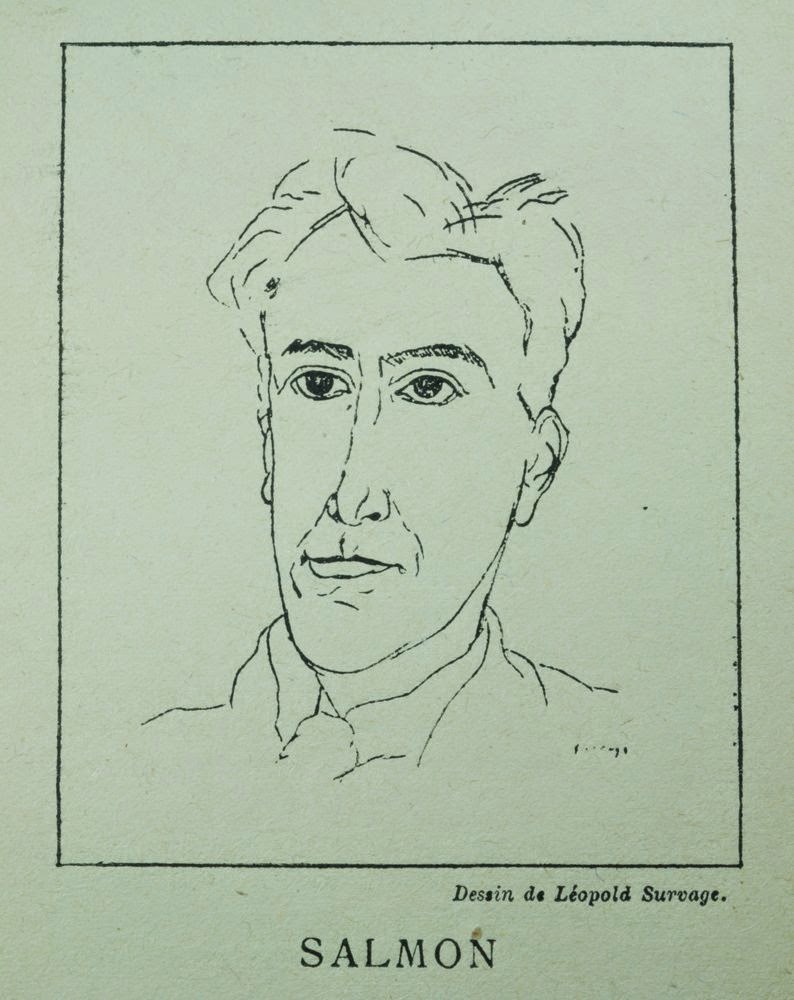
An evocative reminiscence by Jan Gordon in " Three lands on Three Wheels " refers to the "Closerie des Lilas where before the War we used to make merry on Tuesday nights with   Paul Fort , André Salmon, Picasso and all the lights and lesser lights of the Modern Art Movement." Jan Gordon describes André Salmon  (1881-1969) on one of these evenings as follows: " S-, with the unconscious poise of a Nijinsky, waving long, lean hands with incredible grace, led the choruses. " Francis Carco in "The Last Bohemia" (1928) wrote: " We admired André Salmon; he was celebrated. Poet, writer, art critic, his gifts awed us. As for his clothes, cut out of material with large checks, and his small hat perched on top of his head, no one could wear them as he did. They were part of his esthetic baggage, his programme, his own idea, and beside Paul Fort, dressed all in black, they opposed the theory of free verse, and other uncommon rhythms. That was obvio...

Jan and Cora Gordon with Rainer Maria Rilke in pre-WW1 Paris

Image
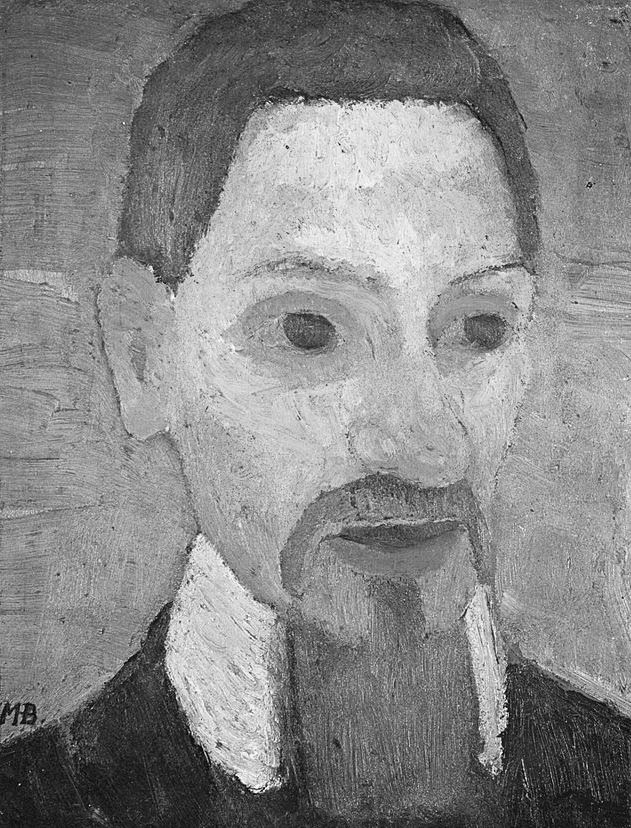
The poet and novelist  Rainer Maria Rilke  (1875-1926) was known for the intensity and mystical nature of his writing. He attended the famous pre-WW1 Tuesday evening talks at the Closerie des Lilas in Paris and is probably the individual described by Jan Gordon (under pseudonym John Salis in "The New Witness")  as " M- Austrian, heavy-souled and a seeker ". Rainer Maria Rilke painted in 1906 by Paula Modersohn-Becker (1876–1907)  (Wikimedia commons, modified) It wasn't all friendly artistic discussion at the Closerie des Lilas and "Ecrire le Sport" (Bordeaux 2005) mentions an incident in which Rilke takes a beating from a boxer outside the famous cafe. Francis Carco (1928) mentions a similar event: " Also there was a splendid fight, at the end of which a boxer belonging to the Prince's [Paul Fort's] following literally stunned me and threw me out. What an adventure! Lying on the pavement with blackened eyes, my right ankle d...

Jan and Cora Gordon and the XXI Gallery, London

Image
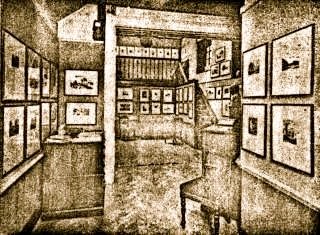
Jan and Cora Gordon exhibited in the XXI Gallery in 1925, as noted in the diary of  Ashley Smith . Their private view was on the 12th February of that year. The gallery name derives from the original address of 21 York Buildings, Adelphi (a district of the City of Westminster in London). A move was later made to Durham House Street, Adelphi, just off the strand, near Waterloo Bridge. Since 1926 the Twenty-one Gallery has been housed at 15 Mill Street, London, W1. The XXI Gallery, London (modified from a copy made by  Harland, P.T. from a clipping dated about 1930) "Throughout the year, exhibitions of the greatest interest are held at the Gallery. Mrs. Bernhard-Smith has been particularly successful in securing the co-operation of some of the leading workers of the day, for Jacob Epstein was one of the first to exhibit there, and later an exhibition of the work of that great Serbian sculptor Ivan Mestrovic, was arranged. Most of the exhibitions are of a single ar...

Early Jan Gordon Paintings on Wooden Panels

Image
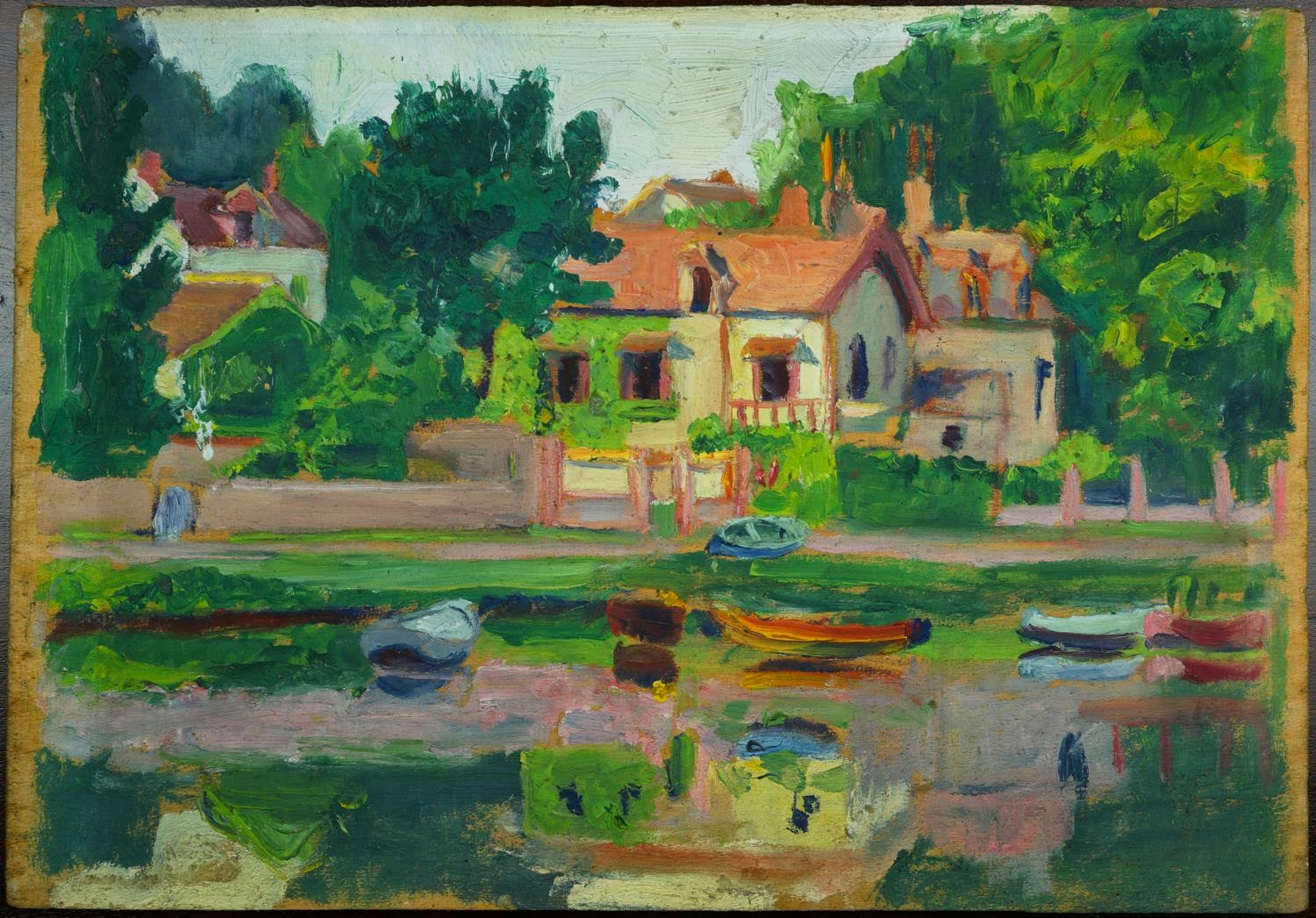
In "A Girl in the Art Class" Jan Gordon describes how, after a disappointing first encounter with an art school ( Julian's ), he had "been persuaded to buy a thumb sketching box for oils." "It was a beautiful little apparatus made by Reeves. It carried two very thin wooden panels and a palette with paints all set out and was no bigger or thicker than a sketch book. The panels measured about five inches by six. The charm of the Luxembourg gardens had from the first attracted me, and one autumn day, taking my sketch box with me, I tried a small sketch direct from nature in the Gardens." Later, when Cora visited Jan' Gordon's place Cora sat in his only chair while Jan showed her his work, "40-odd oil paintings on very thin wooden panels about five by six inches." Here below is the front and back of one such painting on a wooden panel by Jan Gordon. It measures 220 mm by 153 mm (8.6 by 6 inches), so a little larger than those ear...

Jan and Cora Gordon with the Wallins in pre-WW1 Paris

Image
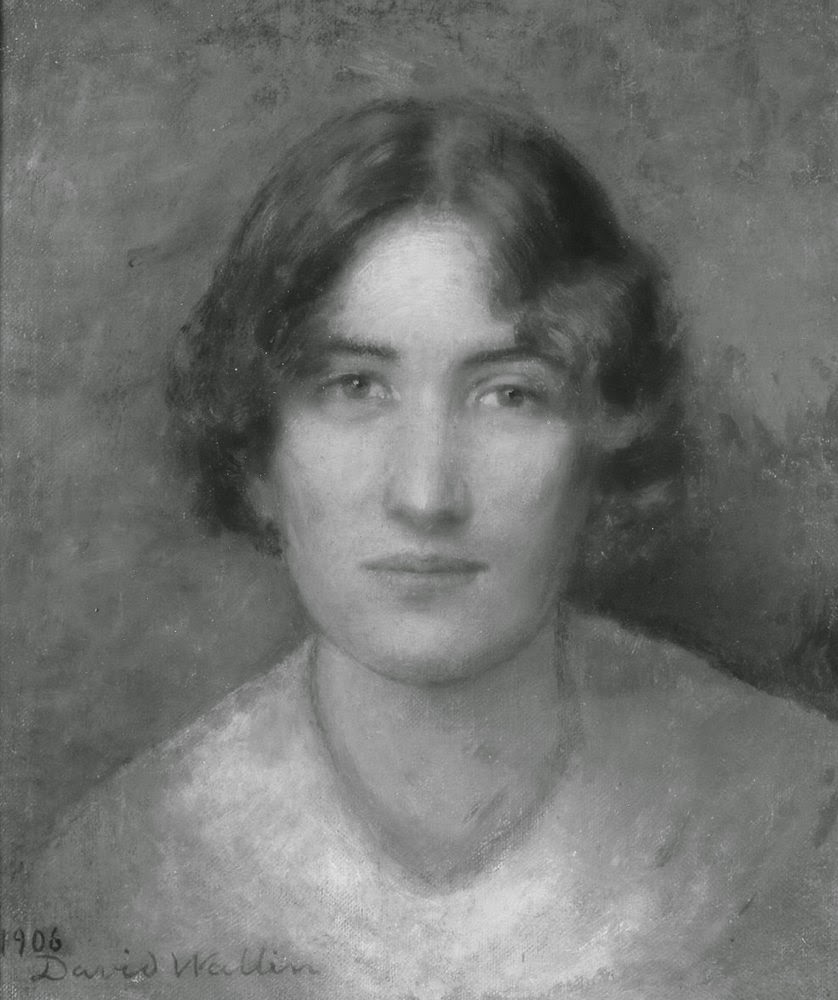
Jan Gordon , recalling Paul Fort 's Tuesday night Parisian cafe gatherings of intellectuals in the period 1911-1913 wrote, "there was Madame W-, a Scandinavian masseuse with white hair and the carriage of an empress, advocate of the married state, loved by everyone; her husband sculptor and dude, who was addicted to collars so tall that he wounded himself in the neck upon their points and was forced for some time to go about smothered in bandages." Madame W- must surely be Elin Wallin (1884-1969) who lived in Paris with husband David from 1910-1913 at 43 Rue de l’Abbé Grégoire in Montparnasse-Luxembourg. I can picture her "carriage of an empress" and promotion of the married state (she and her husband became parents of seven children between 1906 and 1924). Her hair does not seem to be exactly white, however, and I can find no record of her skills as a masseuse. Elin Wallin, Paris 1906, oil painting by David Wallin (Wikimedia Commons, modified) ...